 Skip to content
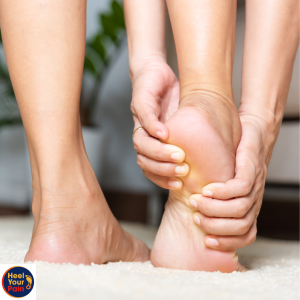
7 Reasons & What to Do Next
If you’ve had plantar fasciitis for months – or perhaps even years – you’ve probably asked yourself the same question:
Why isn’t my plantar fasciitis getting better?
You’ve stretched.
You’ve changed your shoes.
Maybe you’ve tried insoles, massage, rolling your foot, physiotherapy or endless exercises from YouTube.
Some things may have helped temporarily.
But then the heel pain returned.
If that sounds familiar, the problem may not be that you haven’t tried hard enough.
You may simply be focusing on the wrong things.
After working with people with persistent plantar fasciitis for more than a decade, I’ve found that successful recovery often requires us to look beyond the painful heel itself.
Here are seven reasons you may still be struggling.
1. You’re Focusing Only on Where It Hurts
Your heel hurts, so naturally you focus on your heel.
But where you experience pain isn’t necessarily the only place we need to look.
The way you stand, walk and move affects how forces travel through your foot with every step.
That’s why my approach to plantar fasciitis rehabilitation looks at movement as a whole, rather than simply trying to make the painful area feel better temporarily.
2. You’re Trying Lots of Things – But Without a Clear Plan
This is incredibly common.
One week it’s calf stretches.
Then somebody recommends different shoes.
Then it’s an insole.
Then a massage ball.
Then another exercise you found online.
Eventually, you have dozens of pieces of advice but no idea which ones actually matter.
Recovery needs direction.
That’s one of the reasons I created the free 7-Day Heel Pain Recovery Challenge – to give people a clear, simple place to start.
Want a deeper explanation?
My Heel Your Pain guide explains why persistent plantar fasciitis can be so difficult to overcome and introduces the principles behind my approach.
Discover the £4.99 Book →
Click Here for Plantar Fasciitis Heel Your Pain Book
3. You Haven’t Looked at How You Stand
Standing doesn’t feel like an exercise.
But think about how many hours you spend on your feet every day.
Small habits repeated thousands of times can matter.
Understanding how you distribute your weight and use your feet while standing is therefore an important part of the Heel Your Pain approach.
Sometimes recovery begins with something much simpler than another exercise.
It begins with becoming aware of how you’re already moving.
4. You’re Not Considering How You Walk
Walking is something most of us do without thinking.
But when pain develops, our movement can change.
We may shorten our stride, avoid loading one side, stiffen up or compensate elsewhere.
Over time, those changes can become habitual.
Rather than simply telling somebody to “walk more” or “walk less”, I believe it’s important to look at how they’re walking.
That’s why walking guidance forms part of the Heel Your Pain recovery process.
5. You’re Looking for One Magic Exercise
I understand the attraction.
“What’s the best exercise for plantar fasciitis?”
It’s one of the questions people ask all the time.
Unfortunately, recovery is rarely about finding one magical stretch or movement.
It’s usually about putting several appropriate pieces together and progressing them at the right time.
Consistency beats constantly searching for the next exercise.
6. You’re Treating Pain Relief as Recovery
Reducing pain is important.
But temporary pain relief and long-term recovery aren’t necessarily the same thing.
Something may make your heel feel better for an hour without changing the factors that are contributing to the problem.
That’s why I encourage people to ask a different question.
Instead of:
“What will make my heel feel better right now?”
Ask:
“What does my body need to become more capable over time?”
That’s a very different way of approaching rehabilitation.
7. You’re Trying to Figure Everything Out Alone
Persistent plantar fasciitis can be incredibly frustrating.
You can spend hours searching Google, watching videos and reading conflicting opinions.
And eventually you end up with more information – but less certainty.
Sometimes what you need isn’t more information.
You need a clear starting point, some structure and support while you put it into practice.
That’s exactly why I created the Heel Your Pain community.
Start With 7 Days
If you’ve recognised yourself anywhere in this article, don’t try another ten things tomorrow.
Start with one.
I’ve created a FREE 7-Day Heel Pain Recovery Challenge to introduce you to some of the fundamental principles behind the Heel Your Pain approach.
Inside the free community you’ll find:
✅ The 7-Day Recovery Challenge
✅ Simple movement videos
✅ Standing Reset Guide
✅ Walking guidance
✅ Recovery resources
✅ Community support
You don’t need special equipment.
You don’t need hours of exercise.
And you don’t need to understand complicated medical terminology.
Just give me seven days.
Try the movements.
Learn the principles.
Pay attention to how your body responds.
Then decide what your next step should be.
Your Goal Isn’t Simply Less Heel Pain
It’s being able to walk comfortably.
Exercise again.
Enjoy days out.
Keep up with your family.
Return to the activities you’ve been avoiding.
Ultimately, it’s about getting back to living without constantly thinking about your heel.
Ready to Start?
Join the Heel Your Pain community FREE and start the 7-Day Heel Pain Recovery Challenge today.
